Everyone dreams of standing at Machu Picchu, watching clouds part to reveal the Lost City of the Incas. But what if the road to get there could be just as life-changing? In April 2025, we took the Lares Trek with Sam Travel Peru, a 4-day adventure that led us through remote mountain villages, towering passes, and untouched nature—before the final reveal of Machu Picchu.
This post is not just about the destination, but the journey that deepens its meaning. We’ll share our full experience, tips for the trail, and why choosing the Lares route makes arriving at Machu Picchu even more unforgettable.
Tip: Check out our comprehensive 14-day Peru Itinerary to prepare your next trip.
- Why Pair Lares Trek with Machu Picchu?
- April Weather Insights
- The Trek Begins: From Cusco to Cancha Cancha
- Climbing High: Pachacutec Pass and the Colque Cruz Moment
- From Qishwarani to Lares Hot Springs – The Last Climb
- Walking Through Village Life and Soft Green Landscapes
- Final Ascent: Climbing to Hullkiccasa Pass (4,400 m)
- Descending to Cuncani: The Trek Comes to an End
- Relaxation Reward: Soaking in Lares Hot Springs
- Farewell Lunch and Saying Goodbye to the Crew
- Evening in Ollantaytambo: A Taste of History
- Train to Aguas Calientes: Reflecting on the Trek
- Machu Picchu: A Cloud-Covered Reveal
- Entering Machu Picchu: Circuit 2A and a Foggy Surprise
- The Clouds Part: A Magical Machu Picchu Reveal
- Exploring the Ruins: Four Hours of Living History
- Back in Aguas Calientes: Souvenirs, Lunch, and Paddington Bear
- Train Ride Back: Reflections from the Sacred Valley
- The Final Goodbye: Back to Cusco with Gratitude
- Why a Good Guide Makes All the Difference
- Tips for Future Travelers
- Sample Itinerary
- Closing Thoughts
Why Pair Lares Trek with Machu Picchu?
While most travelers reach Machu Picchu via the crowded Inca Trail or the more commercial Salkantay route, the Lares Trek offers a more personal, cultural, and introspective journey. This trail winds through isolated Andean villages where time seems to stand still—homes without electricity, people weaving their own clothes, and families living off the land as their ancestors did.
There are no crowds, no tourist shops—just open valleys, snow-capped peaks, herds of alpacas, and the quiet company of mountain spirits. Along the way, you’re not just gaining altitude—you’re gaining perspective.
By the time we reached Machu Picchu, we didn’t feel like typical visitors. We felt ready. The trek had humbled us, slowed us down, and connected us to the roots of Inca culture. We had walked through the same mountains their ancestors once crossed. So when the clouds lifted and Machu Picchu revealed itself, it wasn’t just a photo-op. It was a homecoming.
April Weather Insights
We hiked in the second half of April—just after rainy season and before the high season. The mountains were green, wildflowers blooming, and the trails nearly empty. Mornings and nights were cold (close to 0°C), but days were pleasant with some light showers.
The Trek Begins: From Cusco to Cancha Cancha
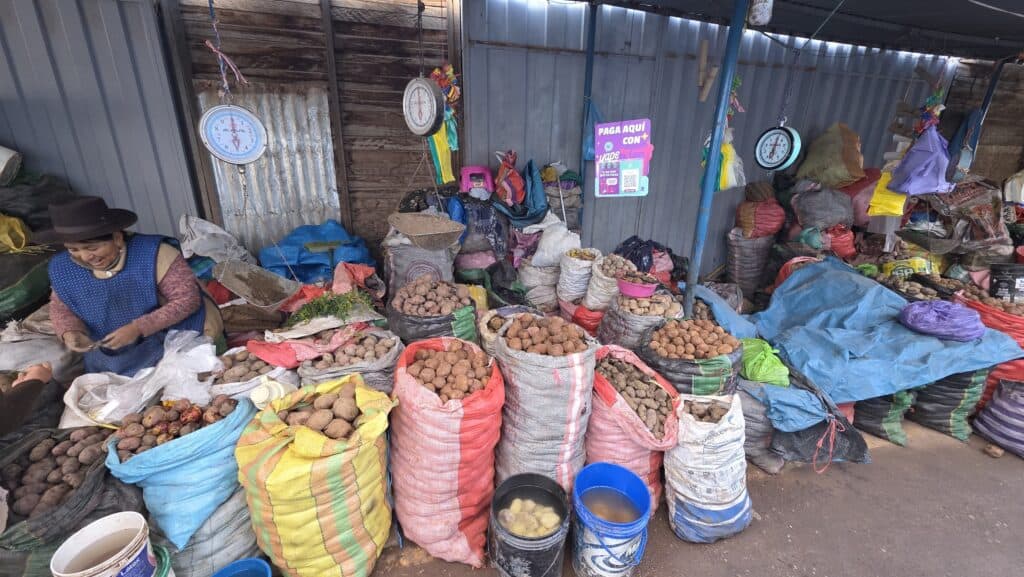
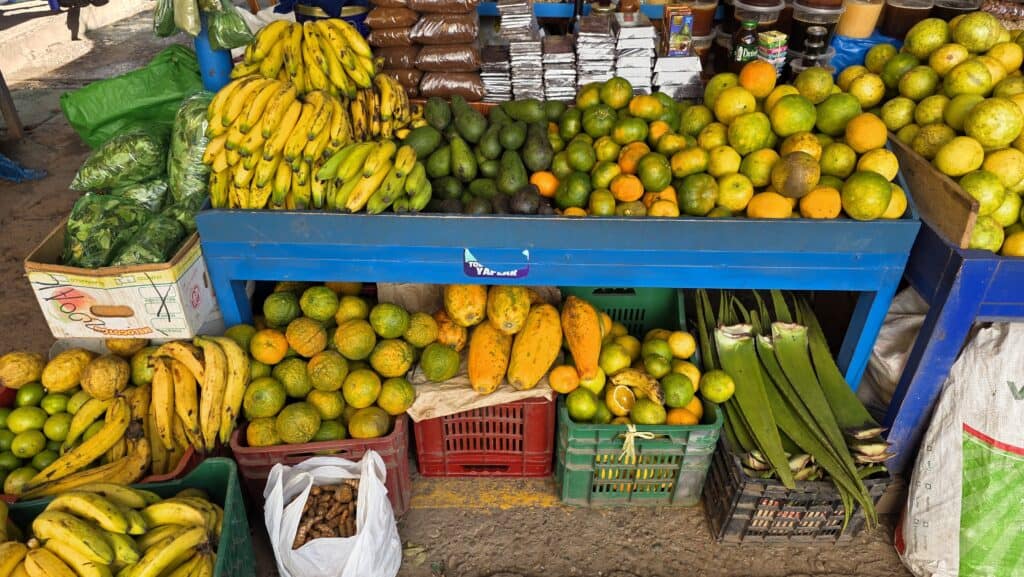
Our day began at 6:00 am, when our guide Miguel picked us up from our accommodation in Cusco. After a scenic drive through the Sacred Valley, we stopped at a local market in Huaran to grab fresh fruit and breakfast. This was also the last opportunity to pick up essentials before entering the backcountry.
Our guide team had great folks who made our journey enjoyable:
- Guide – Miguel
- Chef – Julio
- Sous-Chef – Jovy
- Porter – Maria, Caesar
What to Pack: Daypack vs Duffel for the Mules
At the trailhead in Huaran, we met our horsemen and porters, and got ready to divide our gear.
- Daypack essentials: 2–3L water bladder, rain gear, hoodie or fleece, sunscreen, snacks, GoPro/camera, medications, and trekking poles (in hand).
- Duffel bag for mules: Everything else—clothing, sleeping gear, toiletries—was loaded on the mules.
Tip: You won’t have access to this bag until camp, so pack your daypack wisely!
First Steps into the Andes: Trekking Along the River
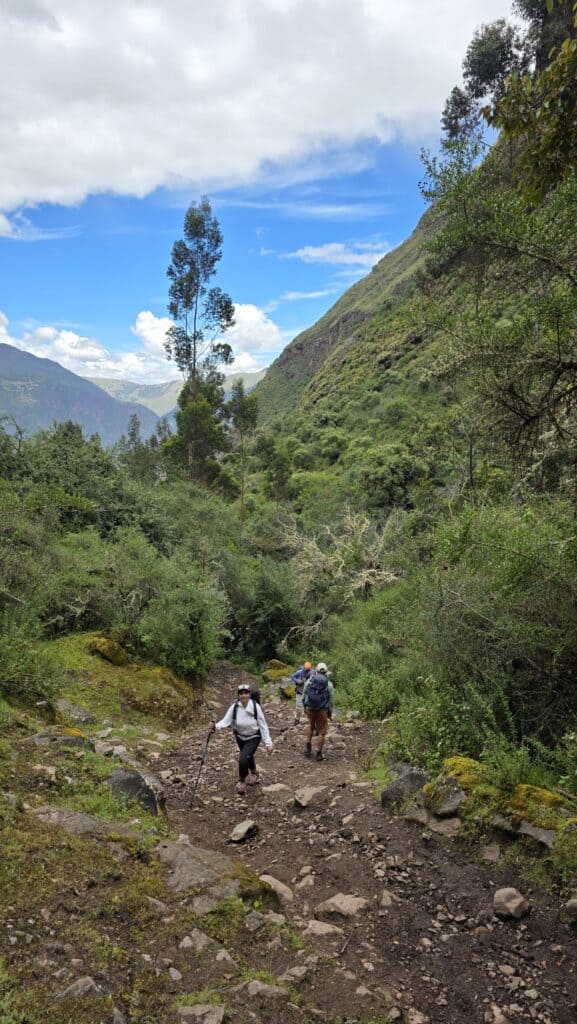
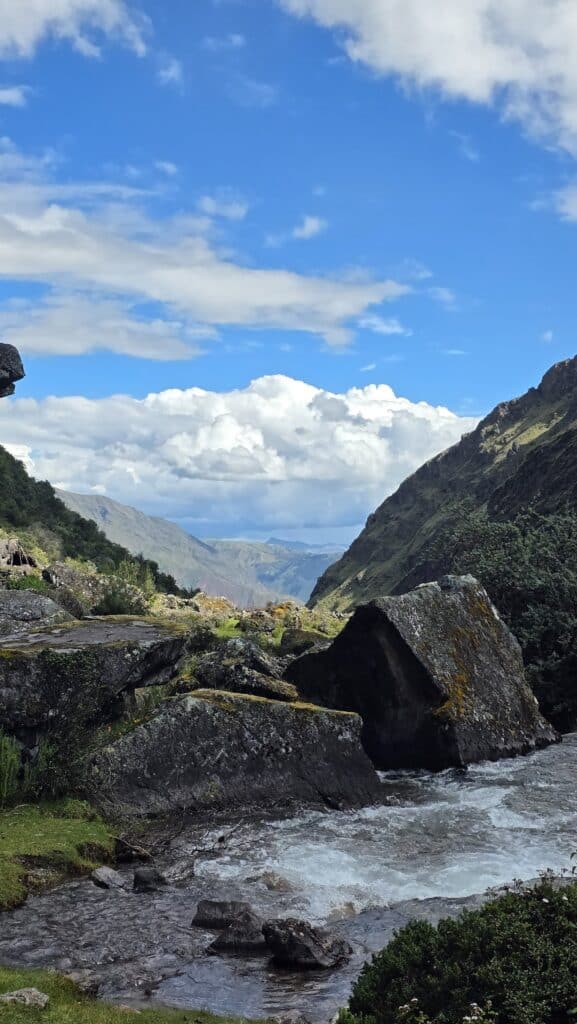
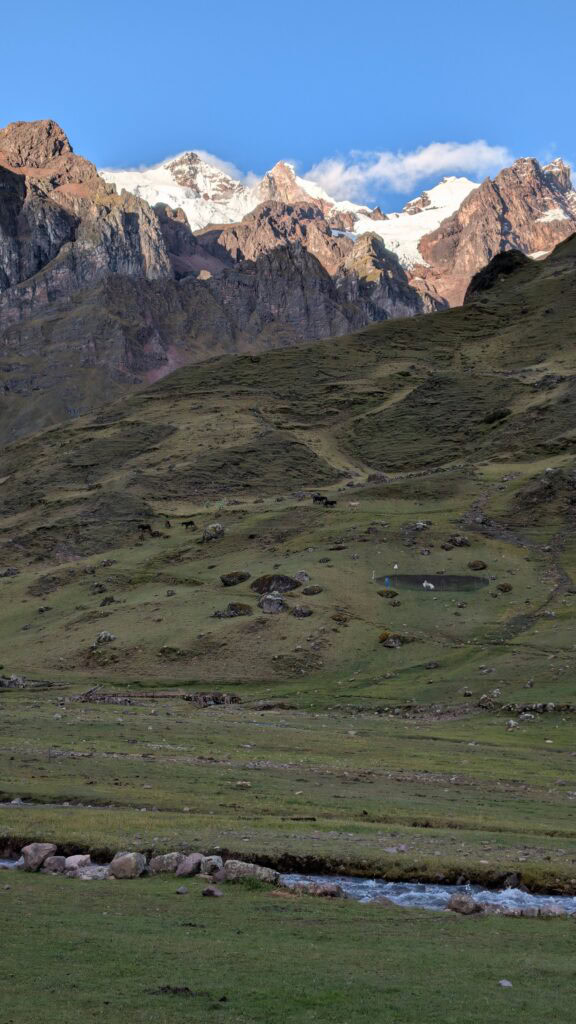
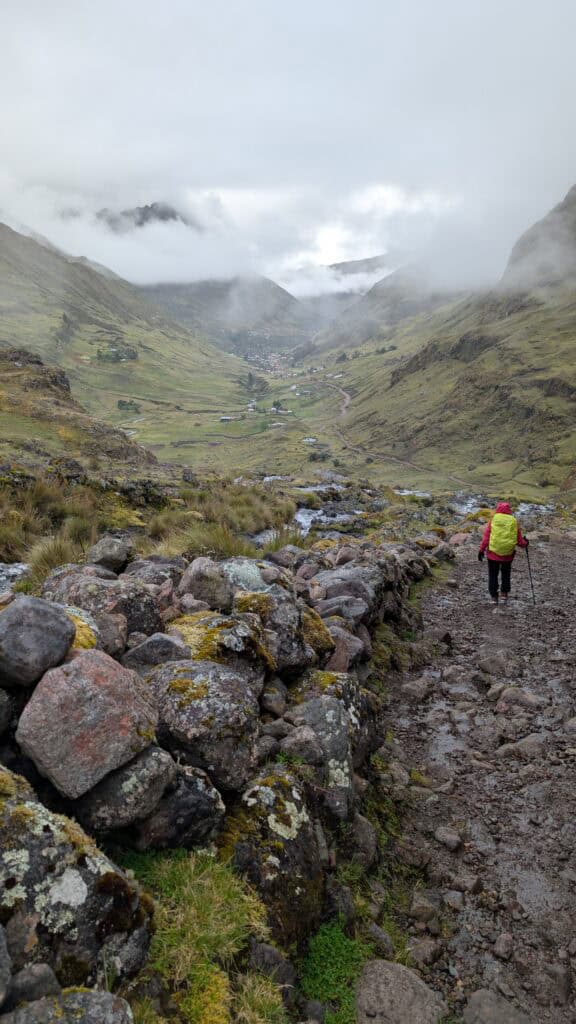
The hike began gently, following a mountain stream through a green valley flanked by towering peaks. The path was tranquil and scenic, with the sound of flowing water accompanying us all the way to lunch.
Lunch in the Mountains: A Scenic Feast
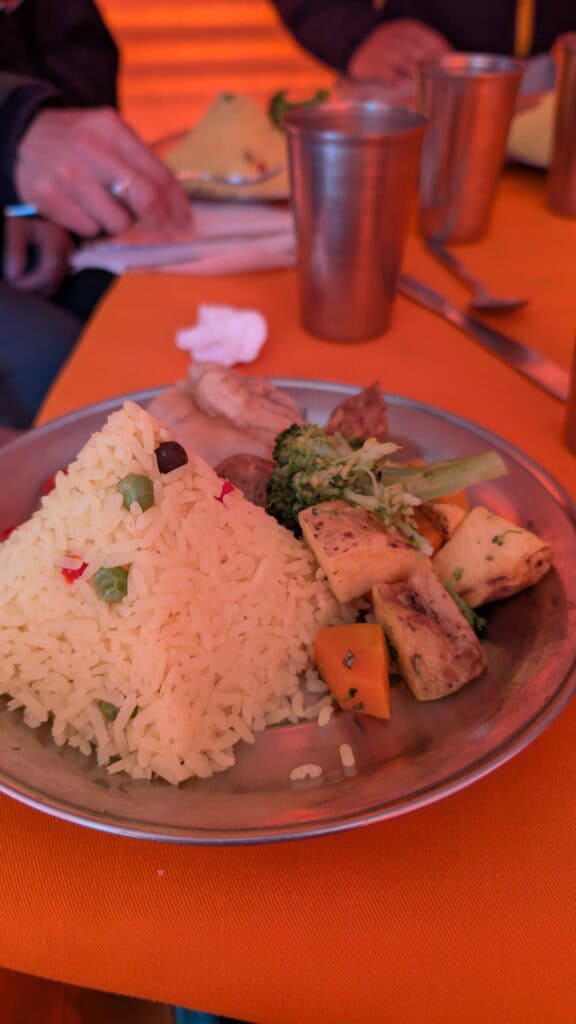
A couple of hours in, we reached our lunch site by the river. The Sam Travel team had already pitched a lunch tent, and the chefs were busy preparing a three-course hot meal. With snow-capped peaks around us and a warm plate in hand, we felt spoiled in the best way.
A Cultural Ritual: Coca Leaves and Apus
Before heading out again, Miguel showed us how to chew coca leaves like locals, a ritual of respect in Andean culture. We picked three leaves, made a small prayer, and blew them toward the Apus—mountain spirits that protect the Andes. Miguel also spoke of Pacha Mama, or Mother Earth, and her central role in the lives of the Quechua people.
Reaching Cancha Cancha: A Highland Village at 3,750m
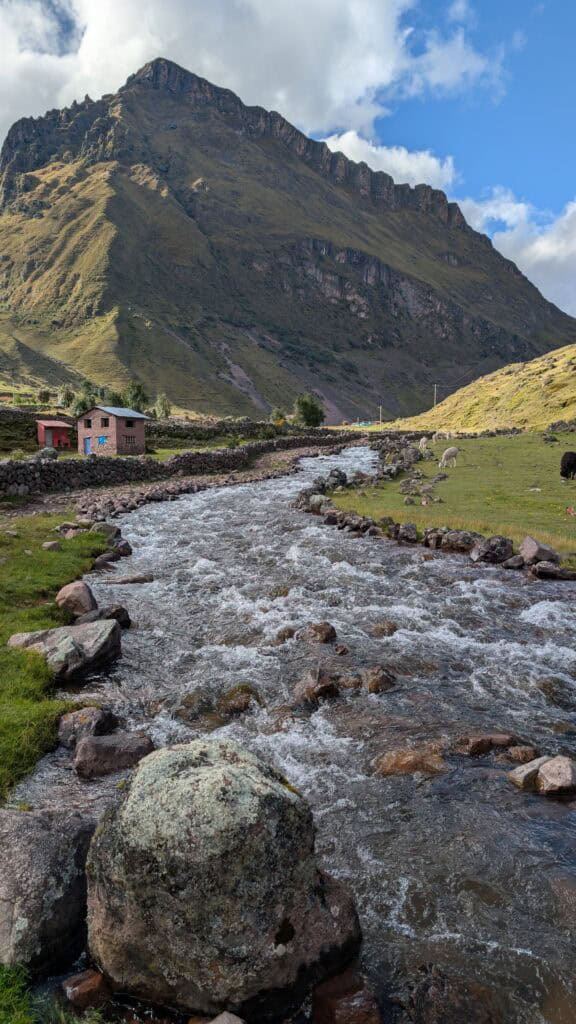
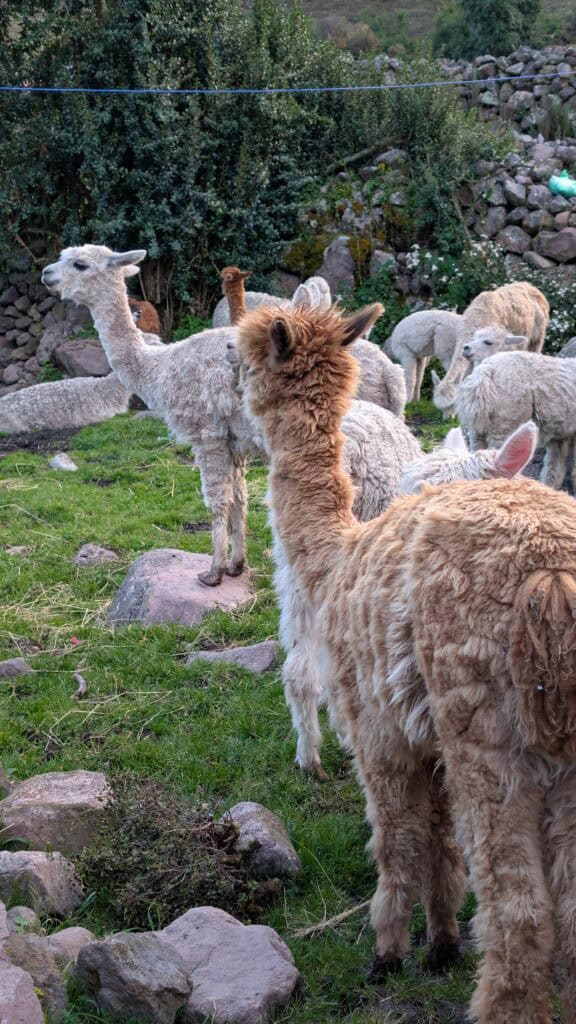
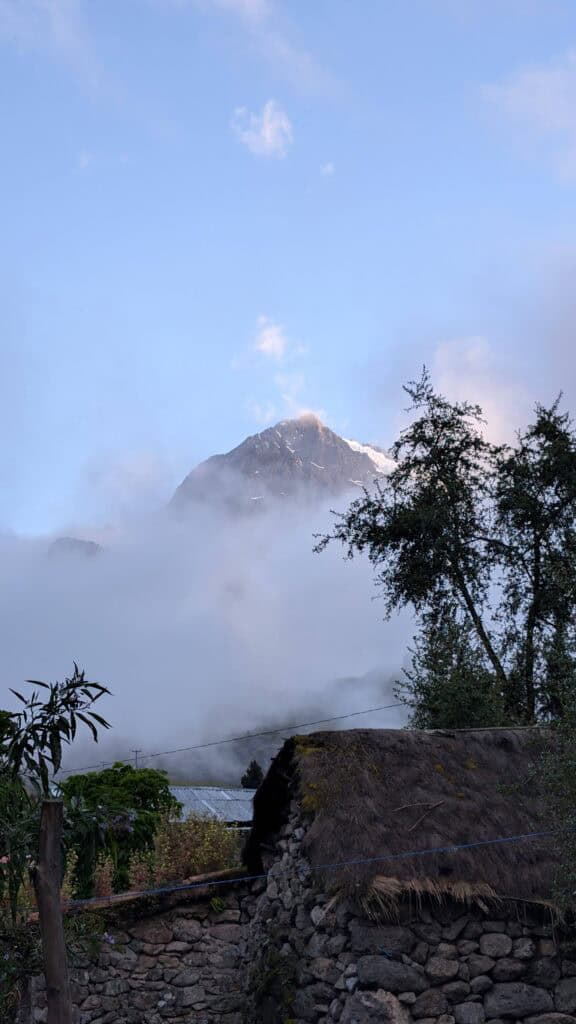
By mid-afternoon, we arrived in Cancha Cancha, a traditional Andean village nestled at 3,750m. Completely self-sufficient, this remote village has no electricity or roads—just stone houses, grazing alpacas, and vibrant woven textiles crafted by hand.
Dinner and Mountain Legends
As we settled into our orange tents (already set up by the time we arrived), we had time to explore the village and chat with locals. That evening, we gathered in the dining tent for another delicious dinner, while Miguel shared fascinating mountain legends, including the eerie tale of Pishtaco, a mythic Andean figure feared across generations.
Sleeping Under the Stars
With the river flowing nearby and stars blanketing the sky, we tucked into our tents. The silence of the mountains and the rhythm of the river made for one of the most peaceful sleeps we’ve ever had.
Climbing High: Pachacutec Pass and the Colque Cruz Moment
Day 2 was known to be the most demanding—both in distance and elevation. Our support team woke us up gently at 5:00 am, handing us steaming hot coca tea right at our tent door. The warmth and tradition of the moment set the tone for the big day ahead.
Preparing for the Toughest Climb of the Trek
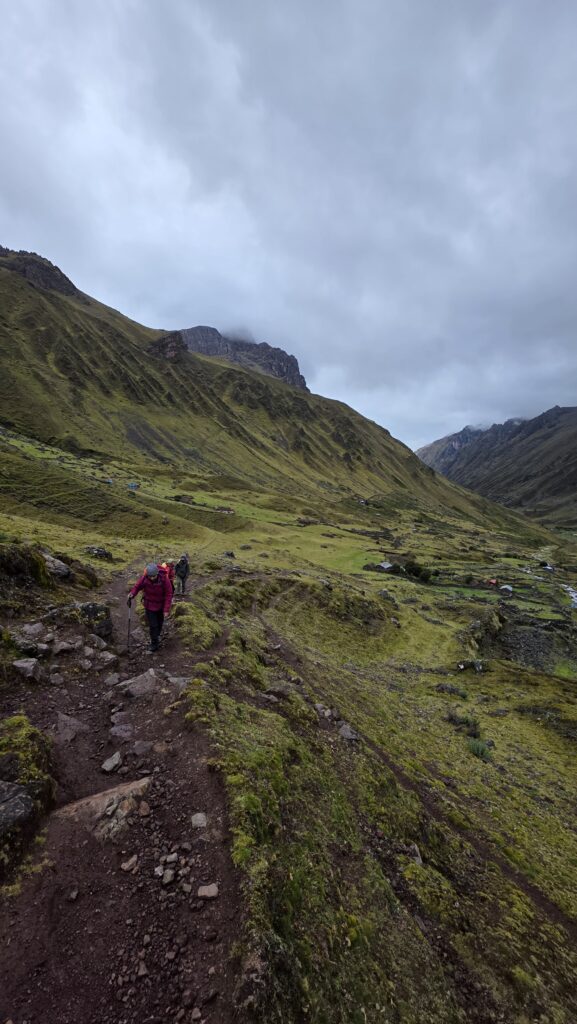
After a hearty breakfast, we layered up and hit the trail by 7:00 am. The path started with a steady incline, and we could immediately feel the effects of the altitude—each step felt heavier, each breath shorter.
To help ourselves adjust, we relied on two things:
- Tea tree oil: A sniff every few minutes helped keep our airways open.
- Coca leaves: Miguel regularly offered us a handful, and they made a noticeable difference.
Trekking Through High-Alpine Valleys and Lakes
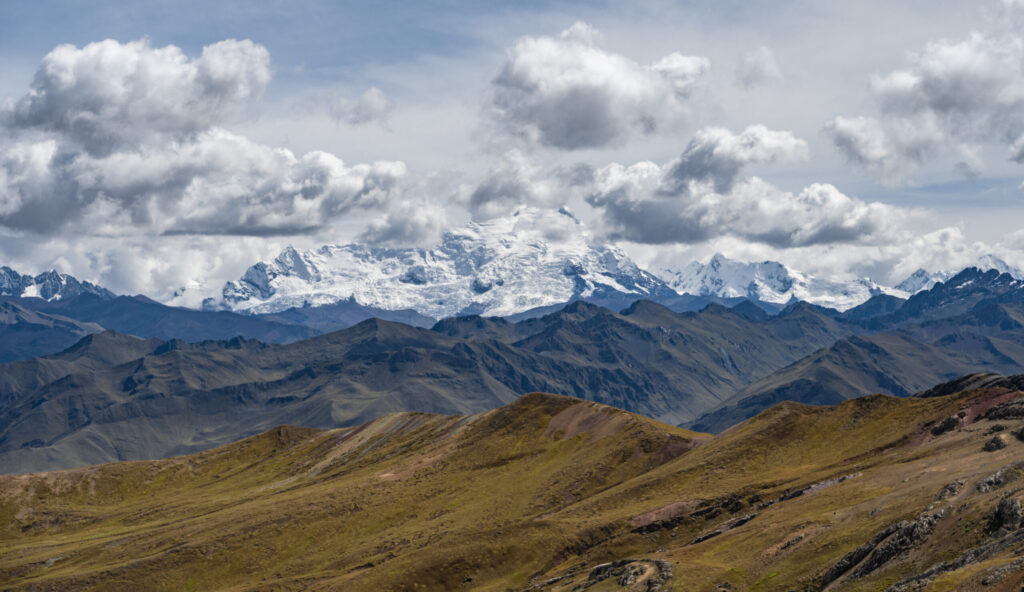
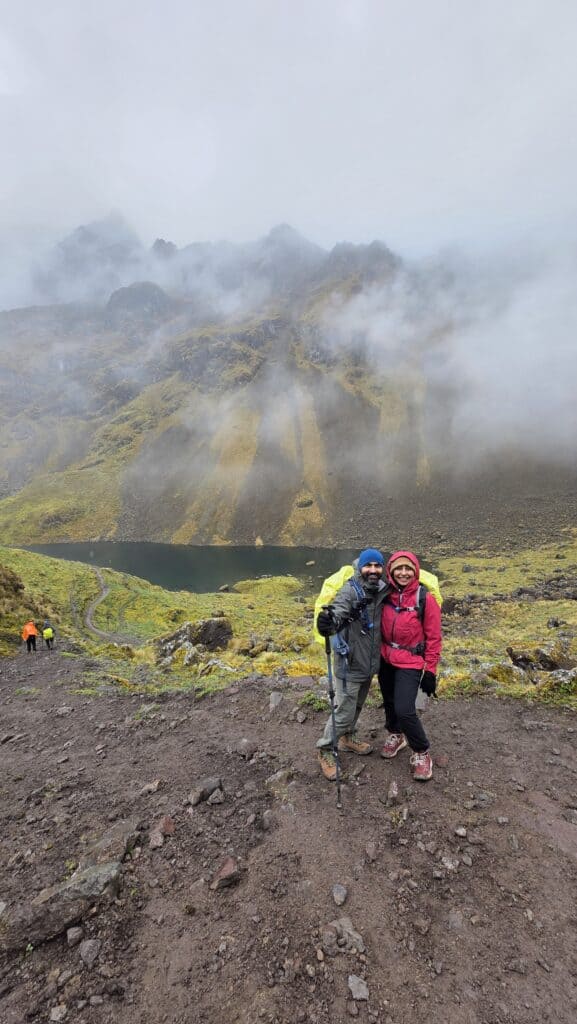
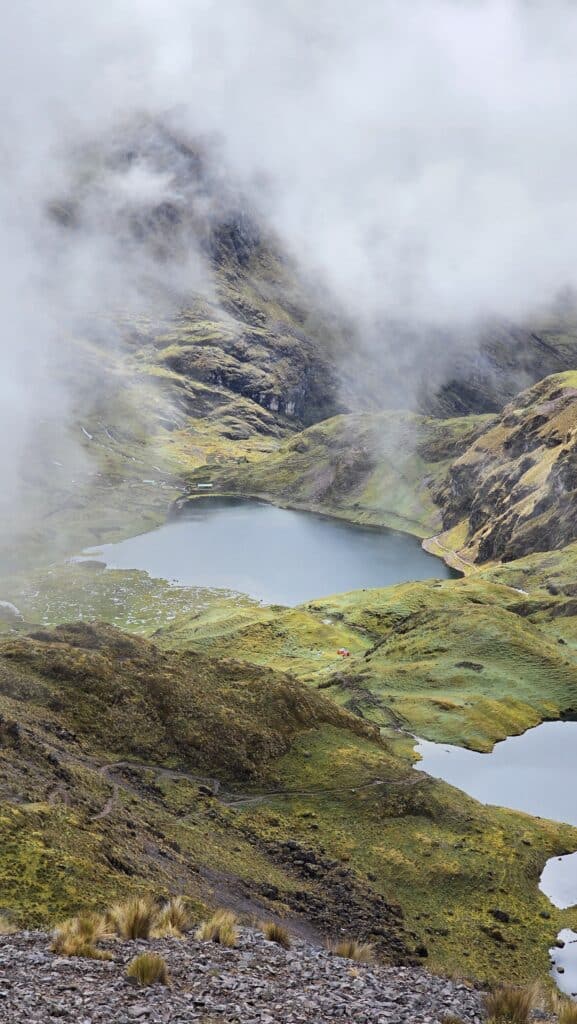
As we climbed higher, the trail wound through breathtaking alpine valleys, past still, mirror-like lakes, and below snow-capped peaks like Veronica and Colque Cruz.
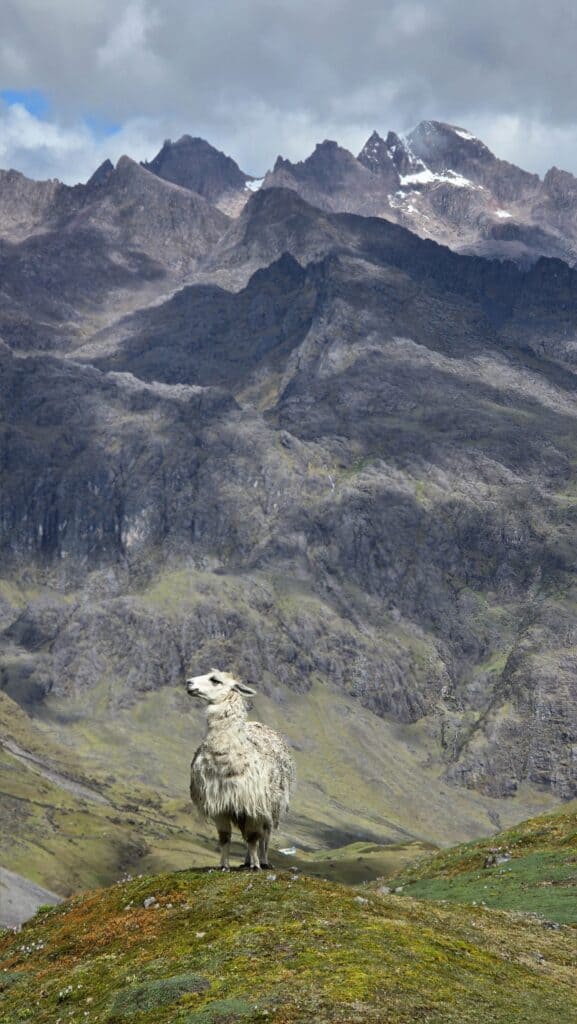
Alpacas dotted the landscape, adding charm and occasional photo ops to an otherwise silent, almost spiritual trail.
Reaching Pachacutec Pass: 4,700 Meters Above Sea Level
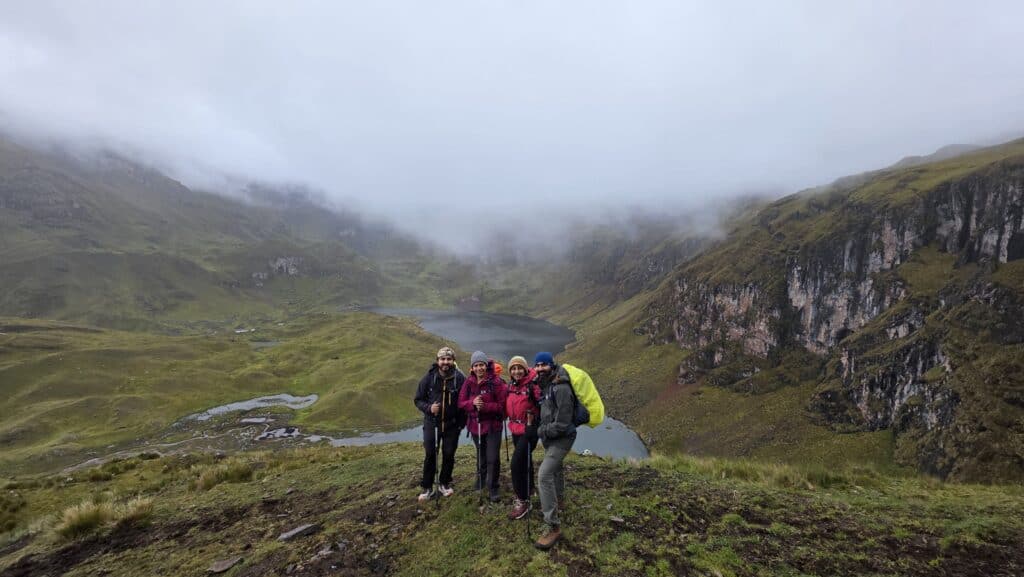
After several intense hours, we stood atop Pachacutec Pass (4,700 m)—the highest point of the trek. The air was thin, but our spirits were high.
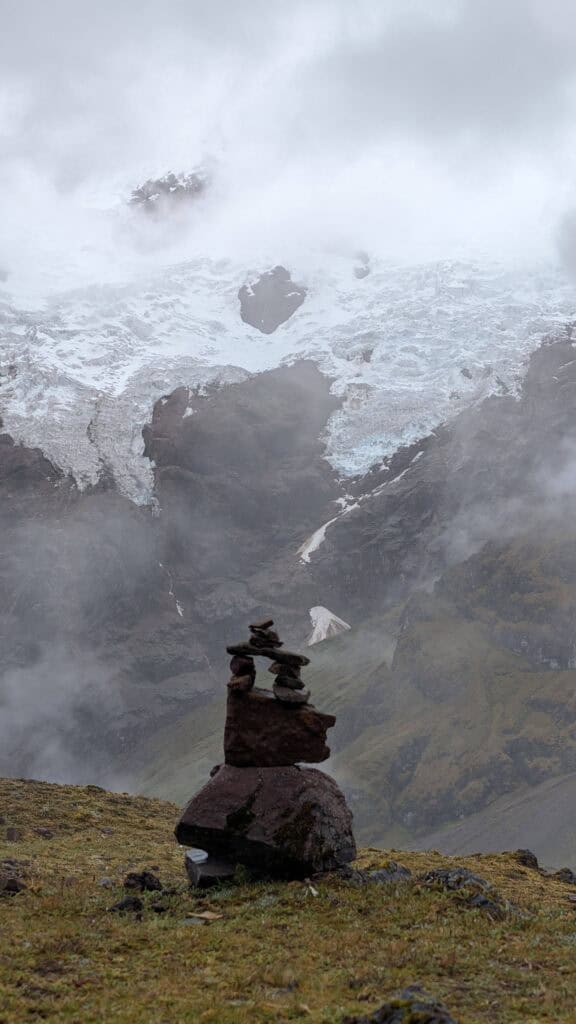
Then came a moment we’ll never forget. As we caught our breath, clouds began to clear, and right before our eyes, the Colque Cruz glacier emerged, glowing against the sky.
In less than a minute, it vanished again—like the mountain had shared a secret and taken it back.
That fleeting, sacred view made every uphill step worth it.
A Long Descent: Gravel Switchbacks and Mountain Views
The way down wasn’t easy either—long gravel switchbacks challenged our knees and balance. Our trekking poles were lifesavers, giving us the support we needed to descend safely and steadily.
Lunch in a Quiet Corner of the Andes
We reached our lunch spot, already set up by the crew in a peaceful highland clearing. Another fresh, three-course meal revived us, and after a restful break, we pushed on.
Arriving in Qishwarani Village: Waterfalls and Stars
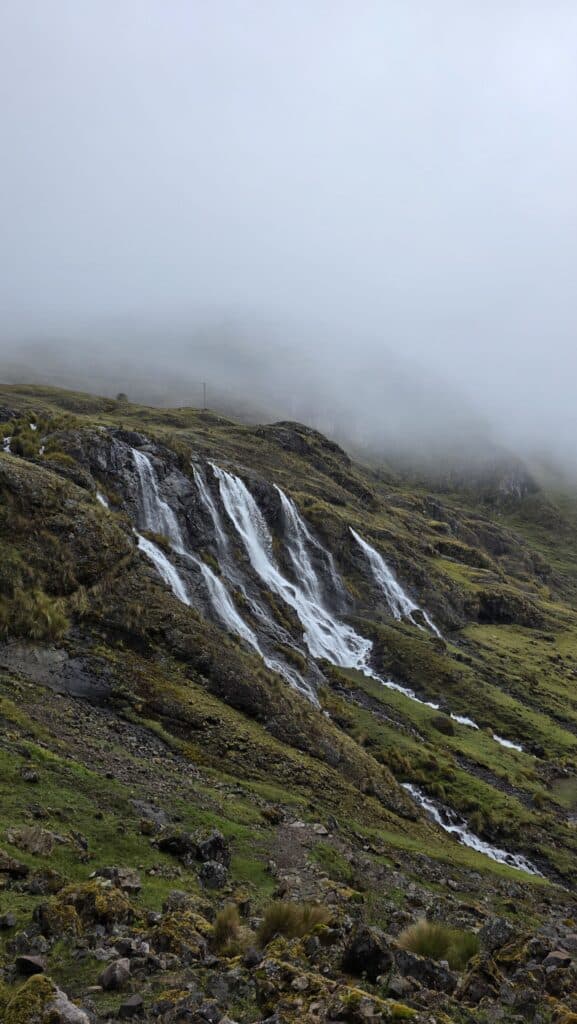
By late afternoon, we reached our next camp in Qishwarani village, passing the famous “seven waterfalls” just before arriving. Once again, our tents were already up, and dinner wasn’t far behind.
As the sun dipped behind the peaks, we looked back at the massive pass we had conquered. One final day of trekking lay ahead—but for now, we felt grounded and grateful.
From Qishwarani to Lares Hot Springs – The Last Climb
Just like the mornings before, we were gently woken with a warm mug of coca tea delivered to our tent. But this morning felt more relaxed—the hardest part of the trek was behind us, and today marked our final push.
Qishwarani village is more connected than previous campsites—it has a road link. The night before, Miguel offered us a choice:
- Take a tour vehicle straight to Lares, or
- Continue the trek over Hullkiccasa Pass.
Sore but proud, we chose to finish on foot.
Walking Through Village Life and Soft Green Landscapes
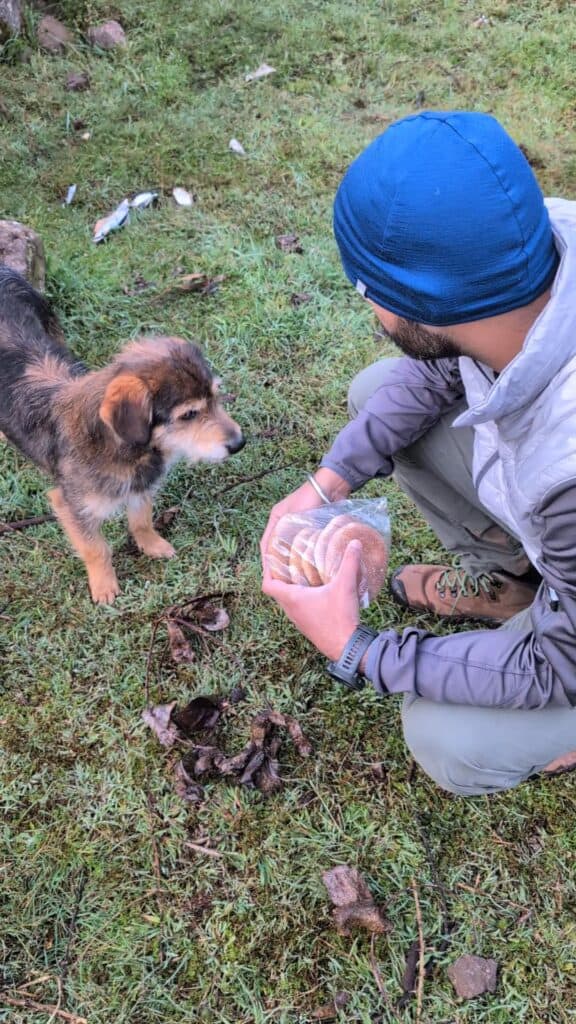
We left camp around sunrise, passing kids walking to school and being joined briefly by cheerful stray dogs—one of those unexpected joys that make trekking so human.
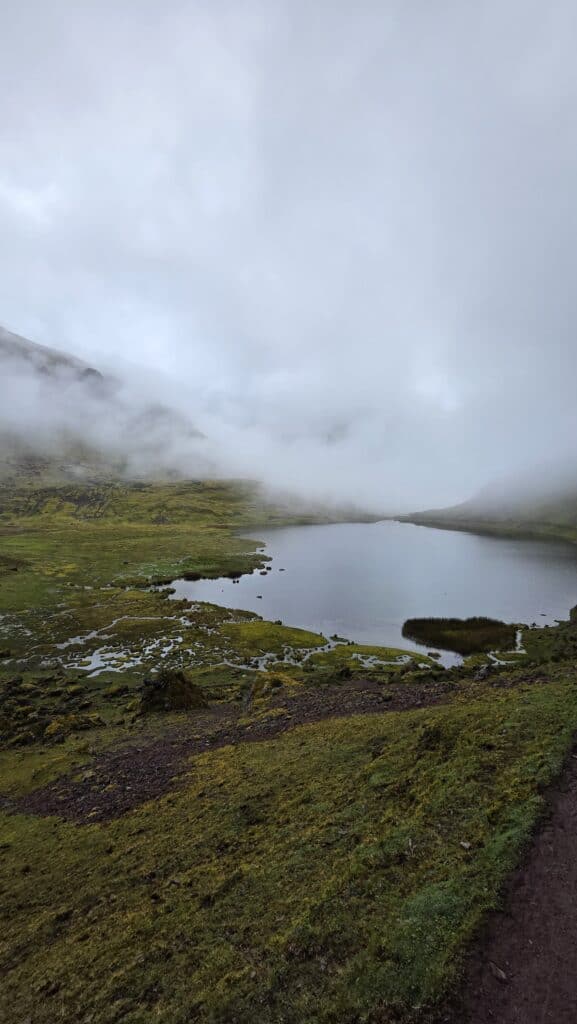
The trail began easily, winding through lush green hills dotted with lakes. Compared to the stark alpine views from the day before, this was gentler, almost meditative. Nature felt more nurturing here—rolling hills, birdsong, and fields of wild grasses.
Final Ascent: Climbing to Hullkiccasa Pass (4,400 m)
The relaxation didn’t last forever. The final climb to Hullkiccasa Pass involved steep switchbacks—short but intense. We paused briefly before the climb, took a few deep breaths, and pushed on.
At the top, the views were panoramic:
- Rolling green hills
- Distant, snow-dusted peaks
- Alpacas grazing in the distance
It was a well-earned final summit—and a rewarding farewell to the trail.
Descending to Cuncani: The Trek Comes to an End
The two-hour descent to Cuncani village took us through open meadows and scattered stone homes. We saw herds of alpacas roaming freely as the valley opened wider. At the village, our tour van was waiting—and just like that, the trekking portion was done.
Relaxation Reward: Soaking in Lares Hot Springs
After three days of dust, altitude, and trail grit, we were beyond ready for a soak. A short drive later, we arrived at Lares Hot Springs—a peaceful oasis.
- Clean, well-maintained pools
- Mostly locals, no tourist crowd
- Surrounded by mountains and silence
The mineral-rich water soothed every muscle in our bodies. It felt like a rite of passage—and a deep exhale after the climb.
Farewell Lunch and Saying Goodbye to the Crew
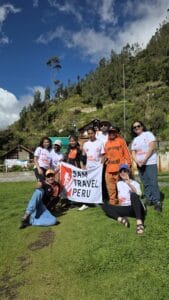
After changing into dry clothes, we gathered with our porters and chefs for a final lunch—warm, delicious, and filled with laughter. We shared hugs, thank-yous, and heartfelt goodbyes. Miguel remained with us as we continued toward Ollantaytambo.
Evening in Ollantaytambo: A Taste of History
The two-hour drive to Ollantaytambo was scenic and calm. Upon arrival, we had just enough time to:
- Grab dinner
- Stroll the cobbled streets
- Spot ancient ruins in the hills around town
Ollantaytambo felt like a hidden gem—less crowded than Cusco, but rich in history and charm.
Train to Aguas Calientes: Reflecting on the Trek
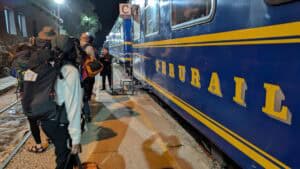
As dusk fell, we boarded the PeruRail train to Aguas Calientes. The journey was quiet and reflective. We sat watching the mountains fade into the night, hearts full from all we’d experienced.
By 9:00 pm, we arrived in Aguas Calientes, checked into our hotel, and collapsed into bed—tired, fulfilled, and ready for the final day: Machu Picchu.
Machu Picchu: A Cloud-Covered Reveal
Even before our alarms, the excitement had kicked in. At 5:30 am, Miguel met us at our hotel in Aguas Calientes. We grabbed our daypacks and walked through the misty streets to the organized shuttle bus line.
Despite the crowd, the system worked like clockwork. Buses lined up one after another, and by 6:30 am, we had reached the gates of Machu Picchu.
Entering Machu Picchu: Circuit 2A and a Foggy Surprise
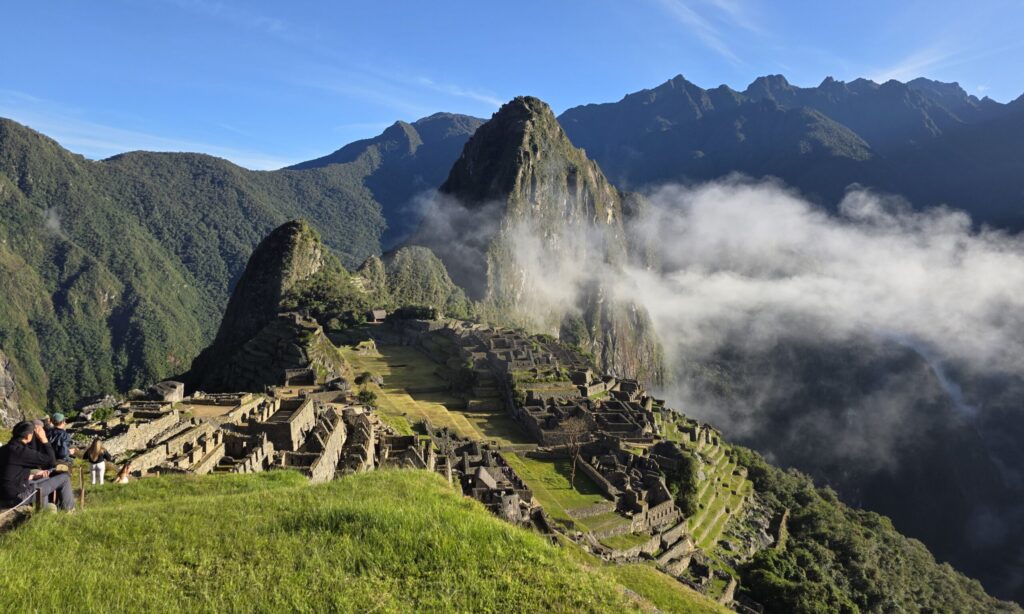
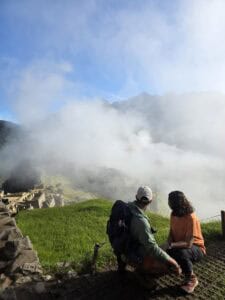
After showing our tickets and passports, we were let into the site. Our entry was for Circuit 2A, the classic loop that includes the iconic postcard viewpoint. We made it early to secure a good spot—and waited in excitement.
But what we saw was… clouds. Just clouds.
No ruins. No grand reveal.
The Clouds Part: A Magical Machu Picchu Reveal
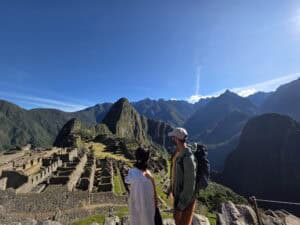
As we stood at the edge, a little disappointed, Miguel smiled calmly, saying, “Wait. You’ll see.” So we waited. And as he began weaving stories of Inca history, the sun rose behind us.
What followed felt like magic:
- First, faint outlines of terraces
- Then, scattered stone buildings peeking through
- Finally, Machu Picchu revealed itself—golden, majestic, and absolutely perfect
It was a moment that made every single step of the last three days feel worth it.
Exploring the Ruins: Four Hours of Living History
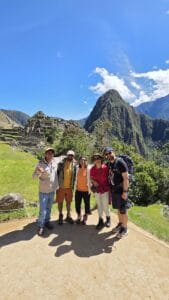
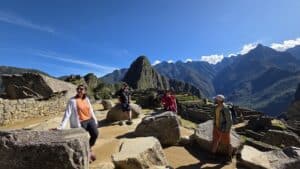
For the next four hours, we wandered through the citadel, following Miguel’s lead. He explained:
- The structure and purpose of different buildings
- Inca engineering marvels like irrigation and stonework
- The spiritual beliefs tied to the site and its layout
With Miguel, every stone had a story, and every corner came alive with history.
Back in Aguas Calientes: Souvenirs, Lunch, and Paddington Bear
After exiting the site, we made our way back down to Aguas Calientes. We had one last lunch with Miguel, enjoying the satisfaction of a journey completed.
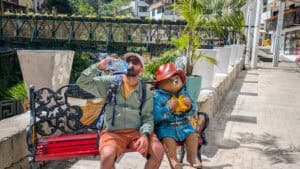
Aguas Calientes is a small, tourist-heavy town—great for souvenirs if you’re willing to haggle. And if you’re feeling curious, keep an eye out for the Paddington Bear statue (yes, really!). We found him sitting on a bench in town—a sweet, unexpected bonus.
Train Ride Back: Reflections from the Sacred Valley
By afternoon, it was time to board the PeruRail train to Ollantaytambo. As the train rolled through the Sacred Valley, we sat quietly, reflecting on everything:
- The cold river at Cancha Cancha
- The sudden appearance of Colque Cruz glacier
- The climb up to Hullkiccasa Pass
- And the moment the clouds lifted over Machu Picchu
Every memory felt richer because we had earned it—step by step.
The Final Goodbye: Back to Cusco with Gratitude
At Ollantaytambo, Miguel was still with us. He rode with us all the way back to Cusco, where we arrived by nightfall. We gave him one final hug and thanked him—not just for guiding us, but for being part of the journey.
From Huaran to Machu Picchu, Miguel wasn’t just a guide—he was the heartbeat of the trek. We truly couldn’t have imagined doing it without him.
Why a Good Guide Makes All the Difference
We can’t say this enough—Miguel made the trip. From his deep knowledge of Inca history to his care during tough climbs, his presence elevated everything. If you’re choosing a trek, pick a guide who’s not just a pro, but someone who brings heart to the journey.
Tips for Future Travelers
- Prepare for altitude: Spend at least 2 nights in Cusco before starting. Tea tree oil helped us breathe easier.
- Pack layers: Nights get cold, and rain is possible any day.
- Trekking poles: A must for steep descents and saving your knees.
- Stay hydrated & snack smart: Sam Travel provides great meals, but carry electrolytes and high-energy snacks.
- Be present: The trek is hard, but also deeply beautiful. Take breaks, soak it in.
Sample Itinerary
Day 1: Cusco -> Huaran -> Cancha Cancha
Day 2: Cancha Cancha -> Pachacutec Pass -> Qishwarani
Day 3: Qishwarani -> Hullkiccasa Pass -> Cuncani -> Lares Hot Springs -> Ollantaytambo -> Train to Aguas Calientes
Day 4: Machu Picchu Sunrise -> Aguas Calientes -> Cusco
Closing Thoughts
Machu Picchu is always magical—but approaching it on foot, through the Lares Valley, made it sacred. Every step prepared us, physically and emotionally. And when the clouds lifted to reveal that ancient city, it felt like a reward for more than just the trek.
If you’re heading to Machu Picchu, consider taking the longer, quieter road. You might just discover that the journey is what makes the destination unforgettable.